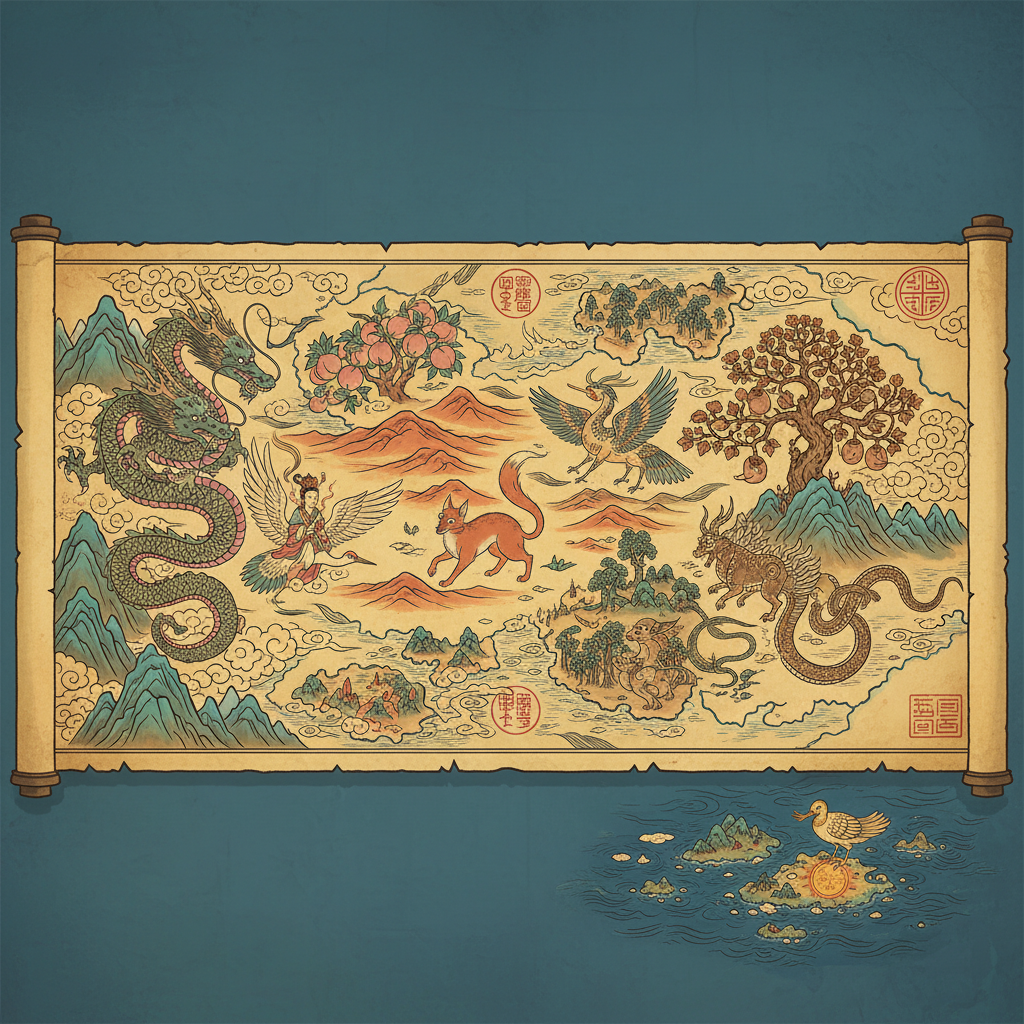
The Shanhaijing: An Overview of a Cultural Treasure
The Shanhaijing, or Classic of Mountains and Seas, is one of the most pivotal texts in Chinese mythology and folklore. Compiled in ancient China during the 4th century BCE to the 1st century CE, this work serves as both a geographical compendium and a mythological anthology. It is a fascinating blend of ancient cartography, zoology, and literature, featuring a myriad of landscapes and the fantastic creatures that inhabit them. The text is organized into sections, each describing different mountains, seas, and the curious beings that dwell within their realms.
Historical Context and Significance
The origins of the Shanhaijing are shrouded in mystery, with debates about its authorship and the time period of its compilation. Scholars suggest that it may incorporate various folklore traditions from China’s early dynasties, transforming oral tales into a written format. As a quintessential piece of Chinese culture, the Shanhaijing not only reflects ancient beliefs and practices but also influences modern Chinese art, literature, and even cultural identity.
By documenting the diverse flora and fauna, along with mythical entities intertwined in these narratives, the Shanhaijing provides insight into how early Chinese society made sense of the natural world. The mythical creatures represented often symbolize natural phenomena or moral lessons, enriching the text with added layers of understanding and significance.
The Iconic Creatures of Shanhaijing
As one delves into the pages of Shanhaijing, they encounter a plethora of remarkable creatures, each more intriguing than the last. Among them are the Jiao (a chimeric creature often compared to dragons), the Huanglong (Yellow Dragon), and the Qiongqi, a monster associated with evil and punishment. These beings embody various traits and characteristics that reflect the cultural values and fears of ancient Chinese society.
The creatures often function as guardians of nature and possess intricate relationships with humans. For example, the Fenghuang, known as the Chinese phoenix, is revered as a symbol of grace and prosperity. It represents harmony in marriages and is linked to feminine virtues, thus highlighting the societal expectations of gender roles in ancient China.
Additionally, the creatures in Shanhaijing serve as metaphors, making them essential for storytelling. Analyzing these entities provides a better grasp of the cultural messages embedded within, revealing how ancient Chinese views on morality, spirituality, and existence were intertwined with the natural realm.
Unveiling the Mythical Lands
Accompanying its array of mythical beings are the enchanting lands depicted in the Shanhaijing. These landscapes are not mere backdrops; rather, they serve as integral components of each narrative, enhancing the stories told within the text. From the desolate wasteland of the East Sea to the paradisiacal Kunlun Mountain, each location is rich with symbolism and mystery.
Kunlun, often regarded as the abode of the immortals, is especially significant. It represents a link between heaven and earth, embodying the aspiration for spiritual transcendence and eternal life. Most famously, it is said to house the legendary Peach Blossom Spring, a place of utopian peace and harmony, dismissing the chaos of the outside world. Such landscapes encourage readers to dream and aspire, serving as realms where the impossible becomes possible.
Cultural Resonance and Modern Interpretations
The cultural relevance of the Shanhaijing continues to inspire contemporary artists and scholars. Its mythic narratives have permeated literature, drama, and visual arts, bridging ancient wisdom with modern creativity. The text’s themes find resonance in contemporary discussions of environmentalism, identity, and the human condition, offering a perpetual source of inspiration.
Art inspired by the Shanhaijing often seeks to recreate the otherworldly charm and beauty of its creatures and landscapes. Modern interpretations explore the balance between tradition and innovation, allowing artists to revisit ancient mythology through contemporary mediums, including animation, graphic novels, and digital art.
Conclusion: Shanhaijing and Its Enduring Legacy
In summation, the Shanhaijing stands as a monumental work that encapsulates the richness of Chinese mythology through a dazzling array of mythical creatures and landscapes. It is more than just an ancient text; it is a portal into the spiritual and cultural psyche of early Chinese civilization. By studying these narratives, we not only preserve an essential part of our heritage but also provide guidance and insights relevant to our lives today. The Shanhaijing invites us to explore the intersection of reality and imagination, reminding us of the profound connection between our world and the fantastical realms that reside within our cultures.