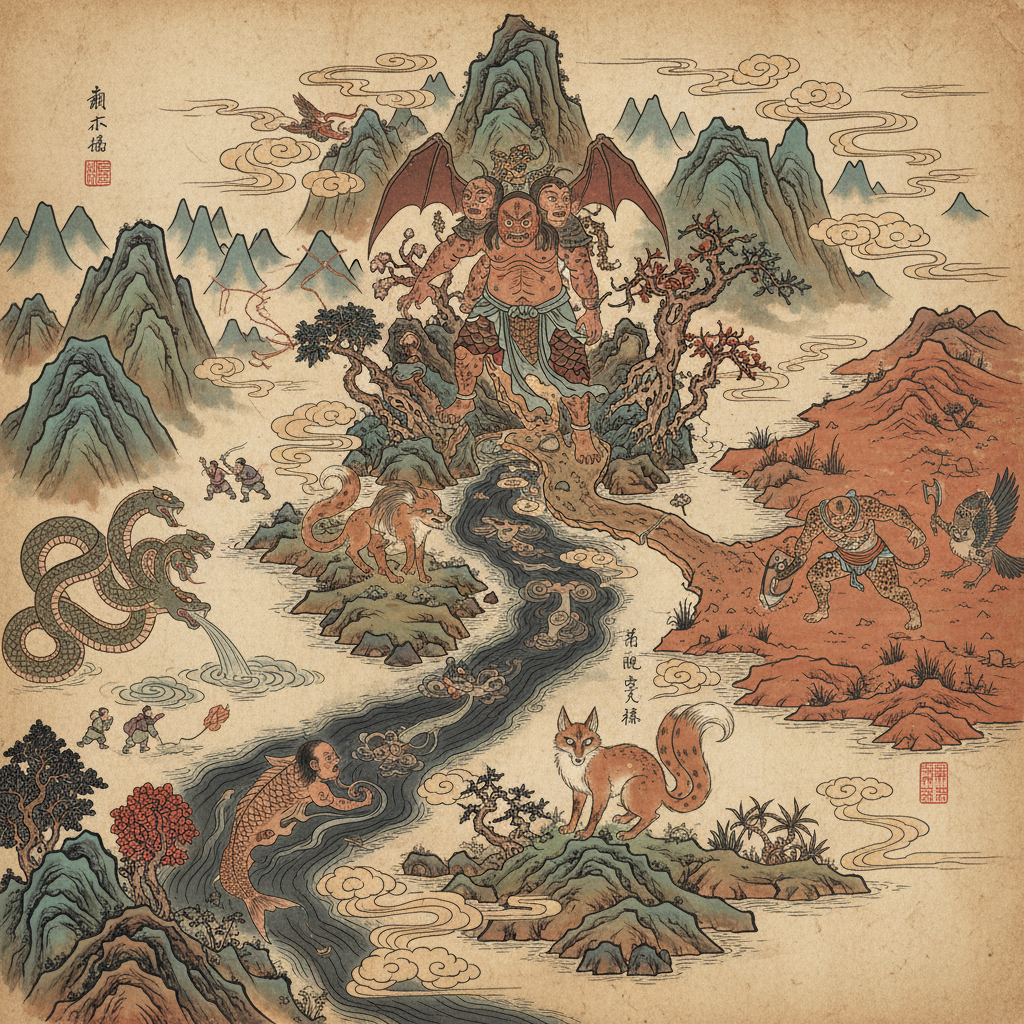
The Enigmatic World of Shanhaijing
The Shanhaijing or "Classic of Mountains and Seas" is a cornerstone of ancient Chinese literature, dating back to the Warring States period (475-221 BCE) and compiled during the Han Dynasty. This ancient text serves multiple purposes: it is a geographical guide, a mythological narrative, and a repository of folklore, showcasing a blend of natural history and mythology. Among its myriad descriptions of landscapes and beings, the Shanhaijing details myriad cursed beings that haunt its realms. Understanding the significance and history of these creatures opens a window into ancient Chinese culture.
The Nature of Cursed Beings in Shanhaijing
In the context of Shanhaijing, cursed beings often symbolize moral lessons, embodying chaos, danger, or even cautionary tales about the natural world. Creatures like the Jiangshi (hopping vampire) or the Gongfu often portray societal fears, be it death or misfortune. Each cursed being serves as an archetype representing human struggles, emotions, and moral transactions.
These mythical beings were not merely for entertainment but held cultural significance. They often illustrated the virtues of bravery and knowledge, emphasizing the value of understanding and respecting the unknown. Portents of doom, these creatures were reminders of balance—between humanity and nature, life and death.
Specific Cursed Beings: A Closer Look
The Shanhaijing lays out a roster of cursed creatures that epitomize fear and misfortune. Here are a few notable examples:
The Mo
The Mo is a creature associated with the desert, often appearing as a ghostly figure. It struck fear into the hearts of travelers, believed to cause misfortune and death. The Mo embodies the treacherous nature of the barren landscapes, teaching the lesson of respect for the harsh environments that surround human habitation.
The Lung Wang
Another infamous figure, the Lung Wang, is said to be a dragon who causes storms. This being highlights the unpredictability of nature—reflecting societal understanding of weather patterns and their consequences. The chaotic and destructive power of Lung Wang served as a cautionary tale, emphasizing harmony with natural phenomena.
The Bai Ze
The mythical Bai Ze is often described as a lion-like creature with a piercing gaze that reveals truths. While not inherently cursed, it represents the concept of confronting fears, overcoming obstacles, and dealing with potential dangers. Bai Ze’s story underscores the importance of wisdom in navigating life's tumultuous challenges.
Cultural Significance of Cursed Beings
The depiction of cursed beings in Shanhaijing is rich with cultural significance. These creatures functioned as symbols reflecting the human conscience, exploring themes of chaos, morality, and redemption. They were tied to the natural world, teaching respect for its mysteries and dangers. Moreover, these beings contributed to the understanding of mythology as a way of grappling with existential fears in a rapidly changing world.
Cursed beings eventually influenced literature, art, and popular culture in East Asia. They are now celebrated in festivals and theatrical performances, acting as vessels for community storytelling and evoking a sense of shared identity across generations.
Reimagining Cursed Beings Today
In contemporary culture, the cursed beings of Shanhaijing have found new life. They continue to inspire modern art and literature, from graphic novels to animated series, highlighting their timeless appeal. Their stories are reinterpreted through various lenses, offering insights about societal fears, haunted pasts, and the exploration of morality.
The relevance of these mythical figures, especially in a rapidly globalizing world, shows their adaptability. Creators now blend traditional narratives with modern themes, allowing younger generations to engage with these ancient tales of horror and wisdom.
Conclusion: Cursed Beings as Cultural Mirrors
The cursed beings of Shanhaijing serve as more than just tales of terror; they reflect the intricate relationship between humanity and the enigmatic forces of nature. Each creature offers lessons on respect, courage, and the importance of moral integrity, embodying cultural heritage passed down through centuries.
As we continue to explore and reinterpret these ancient myths, we find that they remain a powerful tool for understanding ourselves and the world around us. The Shanhaijing's cursed beings serve as a bridge to the past, enriching our present-day lives with narratives that challenge, inspire, and illuminate the complexity of the human experience.