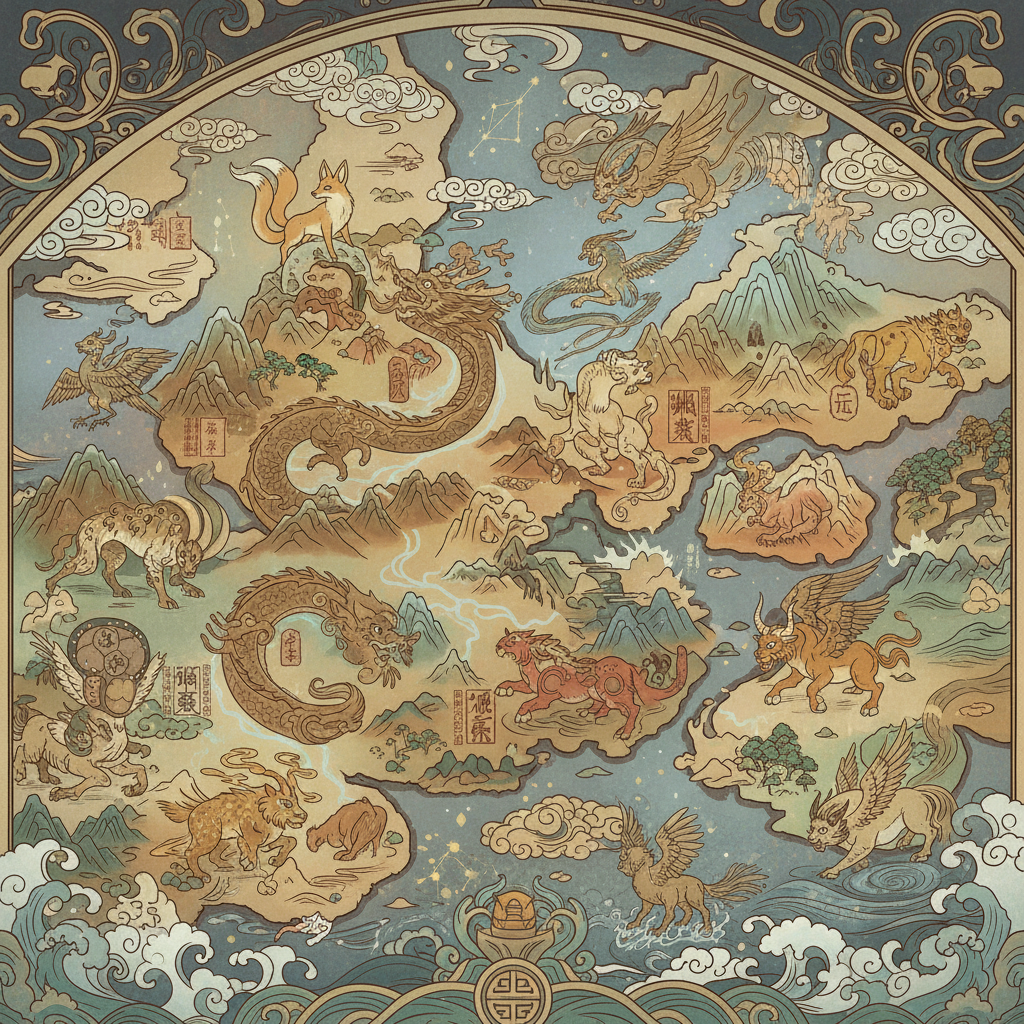
Introduction to Shanhaijing: A Cultural Treasure
The Shanhaijing, or the Classic of Mountains and Seas, is a pivotal text in Chinese mythology, dating back to the 4th century BCE. This ancient compilation outlines the geography, mythical creatures, and deities of ancient China, weaving an intricate tapestry of folklore that continues to influence Chinese culture today. As a rich source of mythology, the work showcases mythical creatures that embody the fears, aspirations, and spiritual ethos of ancient Chinese civilization. The text not only serves as a geographical guide to mythical realms but also engraves a unique understanding of deities in the hearts of its readers.
A Journey Through Mythical Realms
The Shanhaijing is organized into sections that describe various mountains, rivers, and mythical creatures believed to inhabit them. Not merely a geographical record, the text introduces readers to a myriad of beings, such as the Jiuli, a nine-headed dragon boasting immense power, and the Xiangliu, a serpent-like creature often depicted as a harbinger of calamity. Each creature is not just an entity but a symbol illustrating humans' complex relationship with nature and the cosmos.
One notable example is the Houtu, a goddess of the earth and fertility. She represents the nurturing aspect of nature, emphasizing the significance of agriculture and the earth in sustaining life. The juxtaposition of benevolent figures like Houtu against grotesque monsters highlights the way ancient cultures perceived the balance of good and evil, order and chaos.
Rich Symbolism and Cultural Significance
The creatures cataloged in the Shanhaijing serve multiple purposes, making them vital to understanding Chinese cultural consciousness. These beings often embody human traits, reflecting society’s virtues and vices. For instance, the tales of the Bixie—a creature resembling a lion, traditionally believed to ward off evil—demonstrate the importance of protection within Chinese culture.
Moreover, these mythological beings acted as allegories for societal values; they cautioned against hubris, illustrated moral rectitude, and conveyed the significance of harmony. The highly symbolic nature of the creatures links them to specific life lessons, contributing to their enduring relevance in literature, art, and folklore.
The Intersection of Natural and Supernatural Worlds
In the Shanhaijing, the fantastical amalgam of creatures intricately entwined with geography reveals a worldview where natural landscapes and supernatural beings coexist. Many of the mythical creatures described are closely tied to specific locations, making them embodiments of their respective terrains. For example, the Fengwu, a bird-like creature residing in mountains, symbolizes not only the unique geography of these highlands but also expresses a longing for freedom amidst the constraints of earthly life.
Through these associations, the text serves an essential role in connecting the spiritual realm with the physical world, allowing for a rich intercultural dialogue. The creatures function as guardians of their respective lands, fostering a sense of stewardship that encourages respect for nature and the environment.
Legacy and Reinterpretation
The tales and beings from the Shanhaijing have persisted well beyond their initial compilation, influencing various aspects of Chinese culture, including literature, art, and cinema. Creatures like the Qinglong (Azure Dragon) and the Baihu (White Tiger) have metamorphosed into cultural icons, appearing in contemporary storytelling and popular media, including novels and films.
Furthermore, the Shanhaijing's themes resonate with modern environmental consciousness, inspiring people to reflect on humanity's relationship with the natural world. The timeless cautionary tales of the text continue to be relevant, reminding us of our roles as stewards of the earth.
Conclusion: Embracing the Mythical in Modern Life
The Shanhaijing stands as a testament to the rich heritage of Chinese mythology, revealing the interconnectedness of myth, geography, and spirituality. Through its extraordinary array of creatures and deities, the text not only enriches our understanding of ancient beliefs but also provides a framework for addressing contemporary issues such as environmental stewardship. As readers delve into the mystical realms of the Shanhaijing, they embark on a journey that transcends time, inviting them to explore the varied complexities of the natural and supernatural worlds that continue to shape cultural narratives in China and beyond.
In conclusion, the enduring appeal of the Shanhaijing can be seen as a reflection of humanity's age-old quest for meaning within the universe, where mythical creatures illuminate the richness of cultural heritage and the values shared by societies throughout history.