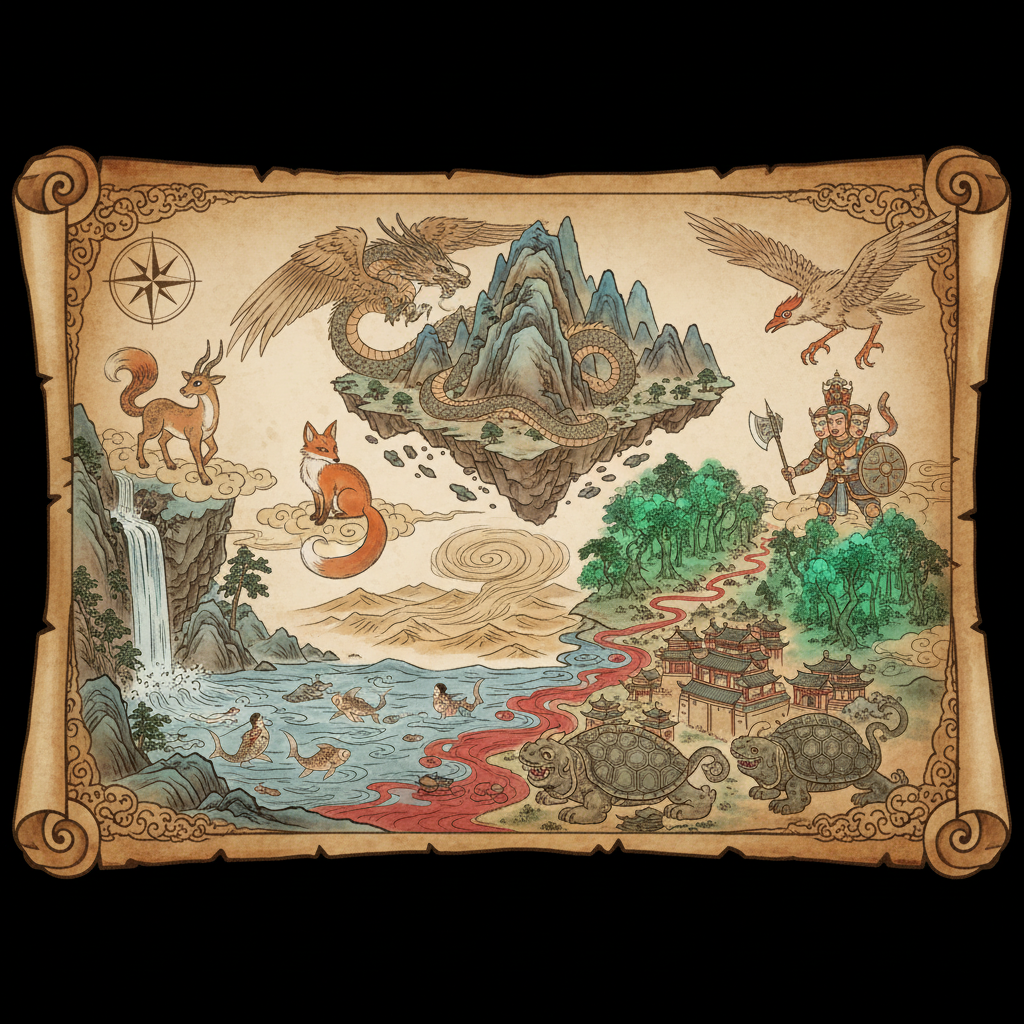
The Shanhaijing: An Introduction to a Rich Tapestry of Mythology
The Shanhaijing, or Classic of Mountains and Seas, is one of the most important texts in ancient Chinese literature, compiled around the 4th century BCE. This grand anthology of mythology, geography, and folklore is not merely a catalog of fantastical lands and creatures but also a window into the cosmology of ancient China. With its myriad stories, the Shanhaijing offers vital insights into the beliefs, rituals, and societal structures of early Chinese civilization, particularly its concepts of guardianship and protection through mythical beings.
The Role of Guardians in Shanhaijing
Among the myriad of creatures described in the Shanhaijing, many serve as guardians of specific realms or elements, symbolizing the prevailing cultural values around protection and sanctity. These guardians often embody natural forces, offering a sacred connection between humanity and nature. The presence of these creatures highlights ancient beliefs in spiritual guardianship, as societies sought to harness the power of mythical beings to protect their lands from chaos and malevolence.
Notable Guardians of the Shanhaijing
One of the most significant guardians mentioned is the Qilin, often regarded as a symbol of good fortune and prosperity. This creature is depicted as a hybrid of different animals, showcasing features like a dragon's head, a horse's body, and hooves resembling those of a deer. The Qilin is often viewed as a protective entity that emerges during the reign of virtuous rulers, further cementing its role as a guardian in societal contexts.
Another notable guardian is the Bai Ze, a lion-like creature depicted with a human head. Bai Ze is famously associated with wisdom and protective powers, having shared vital knowledge of supernatural threats with the Yellow Emperor, a significant figure in Chinese mythology. Representations of Bai Ze often embody teachings related to ethics, governance, and defense against evil, merging the role of cultural educator with that of a protector.
Yet another guardian is the Xuanwu, a mythical tortoise-snake hybrid which encapsulates stability and endurance. Xuanwu is often depicted in Taoist iconography as a protector of the North, guarding against hostile forces and symbolizing strength in adversity. Often associated with martial power, the Xuanwu serves as a reminder of the importance of resilience and fortitude in ancient culture.
The Symbolism of Mythical Lands
In addition to their guardians, the lands described in the Shanhaijing are steeped in symbolism, representing different aspects of existence and various connections to supernatural forces. The regions such as "The Land of the Immortals," and "The Mountain of the Sacred," showcase not only physical geography but also embody spiritual and philosophical ideals central to Daoism and Confucianism.
The planetary geography laid out in the text illustrates how these mythical territories are often places of convergence between the human and divine. They serve as thresholds where the mortal realm meets celestial powers, suggesting that the guardianship depicted in the Shanhaijing transcends mere mythology to reflect deeper moral beliefs ingrained within society.
Cultural Significance and Legacy
The Shanhaijing has fueled countless interpretations and adaptations throughout history, inspiring art, literature, and even modern interpretations in film and video games. The narratives surrounding its guardians have played a crucial role in the continuation of cultural rituals and local beliefs. Festivals celebrating these creatures not only foster a sense of identity but also promote communal bonding through shared traditions.
Moreover, the Shanhaijing has become a cultural heritage site, influencing artists and scholars worldwide. Its thematic depth resonates across various cultures and serves as a point of reflection on the relationship between humanity and the mythical. The ongoing fascination with these guardians feeds into contemporary discourse about nature and spirituality, highlighting their lasting impact on cultural understanding and environmental respect.
Conclusion: The Enduring Guardians of Shanhaijing
As we delve into the enigmatic world of the Shanhaijing, the guardians of its mythical lands remind us of the fragile interconnectedness between humanity and the supernatural forces that govern our lives. These figures embody profound wisdom and protection, fostering a cultural legacy that still resonates today. The Shanhaijing remains a compelling testament to the enduring power of mythology in shaping cultural narratives and belief systems, inviting us to explore and honor the guardians that watch over both the physical and metaphysical realms.