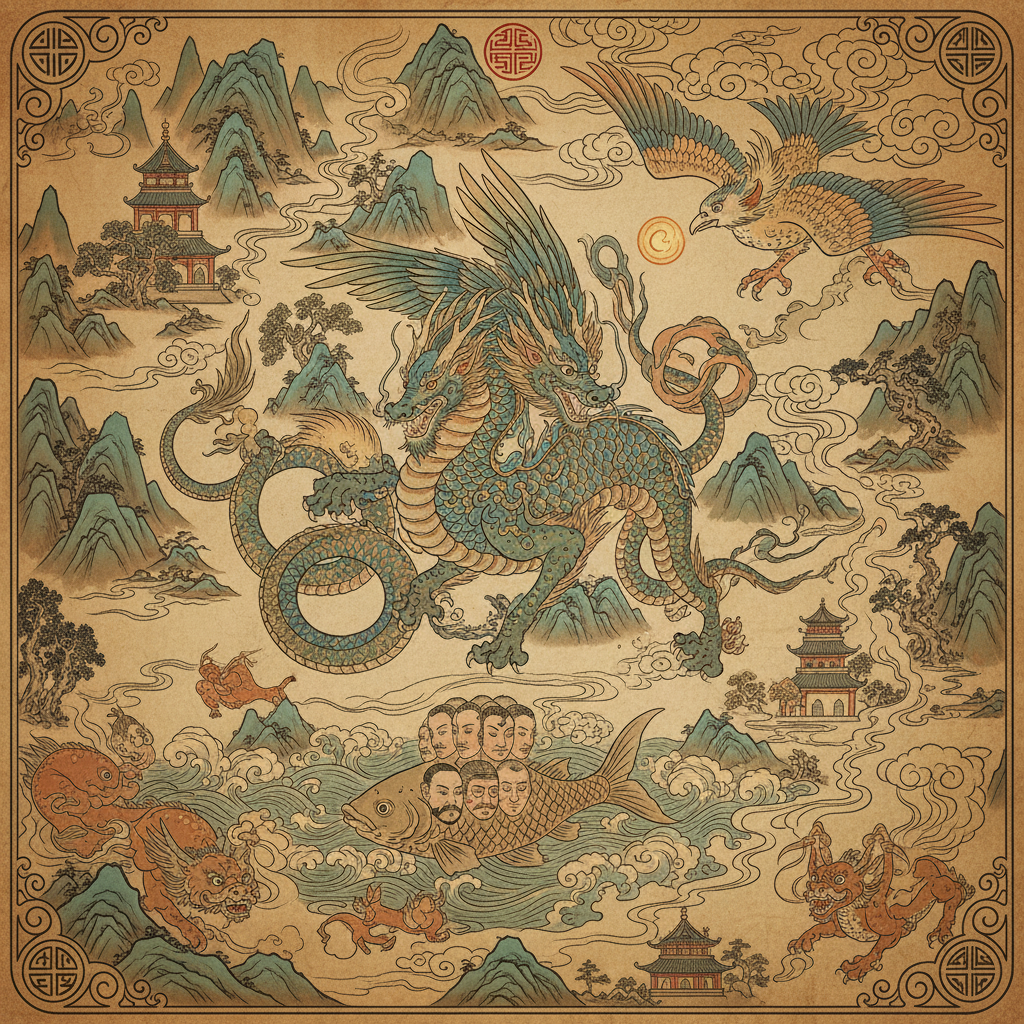
The Shanhaijing: An Overview of Ancient Chinese Mythology
The Shanhaijing, or Classic of Mountains and Seas, is a seminal text in Chinese mythology that dates back to the 4th century BCE. It is divided into sections that explore distant lands, mythical creatures, and deities. This work serves not only as a guide to geography and natural history but also as a reflection of the cultural beliefs and spiritual practices of ancient Chinese civilization. Within its pages, a plethora of hybrid creatures emerge, embodying human traits while presenting otherworldly characteristics, often symbolizing deeper philosophical ideas and moral lessons.
The Alluring Nature of Hybrid Creatures
Hybrid creatures in the Shanhaijing often serve as metaphors for the chaotically intertwined nature of the cosmos. These beings combine features of various animals and humans, encapsulating the blending of different elements of existence. For instance, one of the most captivating hybrids is the Bai Ze, a creature with the body of a lion, covered in fur, and possessing human-like features. It is often depicted with multiple eyes, symbolizing insight and vigilance.
The inclusion of hybrid beings reflects an ancient worldview that recognizes the interconnectedness of life, and these creatures often inhabit realms that transcend the ordinary, emphasizing their significance not just in mythology but in the natural and spiritual worlds.
Notable Hybrid Beasts in the Shanhaijing
Among the myriad of hybrid creatures, several stand out for their unique characteristics and stories:
-
Xuanwu: A tortoise-snake hybrid often depicted in black, Xuanwu is associated with the northern direction and the element of water. Revered in both Taoism and Buddhism, this creature is a guardian of the northern quadrant of the universe, symbolizing protection and stability.
-
Jiangshi: Similar to the Western concept of a vampire, the jiangshi is known as a "hopping corpse." This creature may have once represented fears surrounding death and the afterlife, and its hybrid nature reflects the tension between life and death, the human experience, and the supernatural.
-
Huli Jing: Commonly known as the fox spirit, this creature can appear both as a seductive woman and a cunning fox, demonstrating duality. The huli jing challenges societal norms, representing femininity, seduction, and danger, and blurs the lines between the human and mystical realms.
These unique beings hold a dual purpose: they are narratives reflecting historical fears, desires, and challenges while also serving deeper symbolic meanings interconnected with Chinese philosophical principles.
Cultural Significance of Hybrid Creatures
The hybrid creatures in the Shanhaijing reflect the cultural psyche of ancient China. Each being represents various aspects of moral and ethical values. They embody fears, desires, ambitions, and idiosyncrasies that inhabit the human condition. These creatures were not only entertainment but also cautionary tales, imparting wisdom and reinforcing societal norms.
For example, the Xuanwu teaches the importance of balance and protection, while the jiangshi serves as a metaphor for the fear of death and the importance of respecting the deceased. The huli jing, on the other hand, embodies the complexities of gender roles in ancient society—possessing beauty and danger in equal measure.
The Legacy of the Shanhaijing in Modern Culture
The Shanhaijing continues to resonate in modern Chinese culture and beyond. Films, literature, and art frequently draw upon its rich tapestry of legendary creatures and stories. The hybrid beings present remarkable opportunities for storytelling and character development in contemporary narratives, often inciting profound reflections on the duality of existence.
Moreover, as globalization has increased interactions between cultures, interest in these ancient mythologies has grown worldwide. The hybrid creatures serve as fascinating explorations of humanity's connection to its roots, ideals, and the environment.
Conclusion: Embracing the Mythical
In summary, the hybrid creatures of the Shanhaijing not only enrich our understanding of ancient Chinese mythology but also encourage us to explore the fragmented aspects of our existence. Through these mythical beings, we can glean insights into our fears, moral dilemmas, and aspirations, encouraging a greater appreciation for the complex interplay between mankind and the mythological realms that shape our understanding of the universe. As we continually delve into these ancient texts, the lessons embedded in these hybrid beings remain timeless, inviting contemplation and wonder for generations to come.