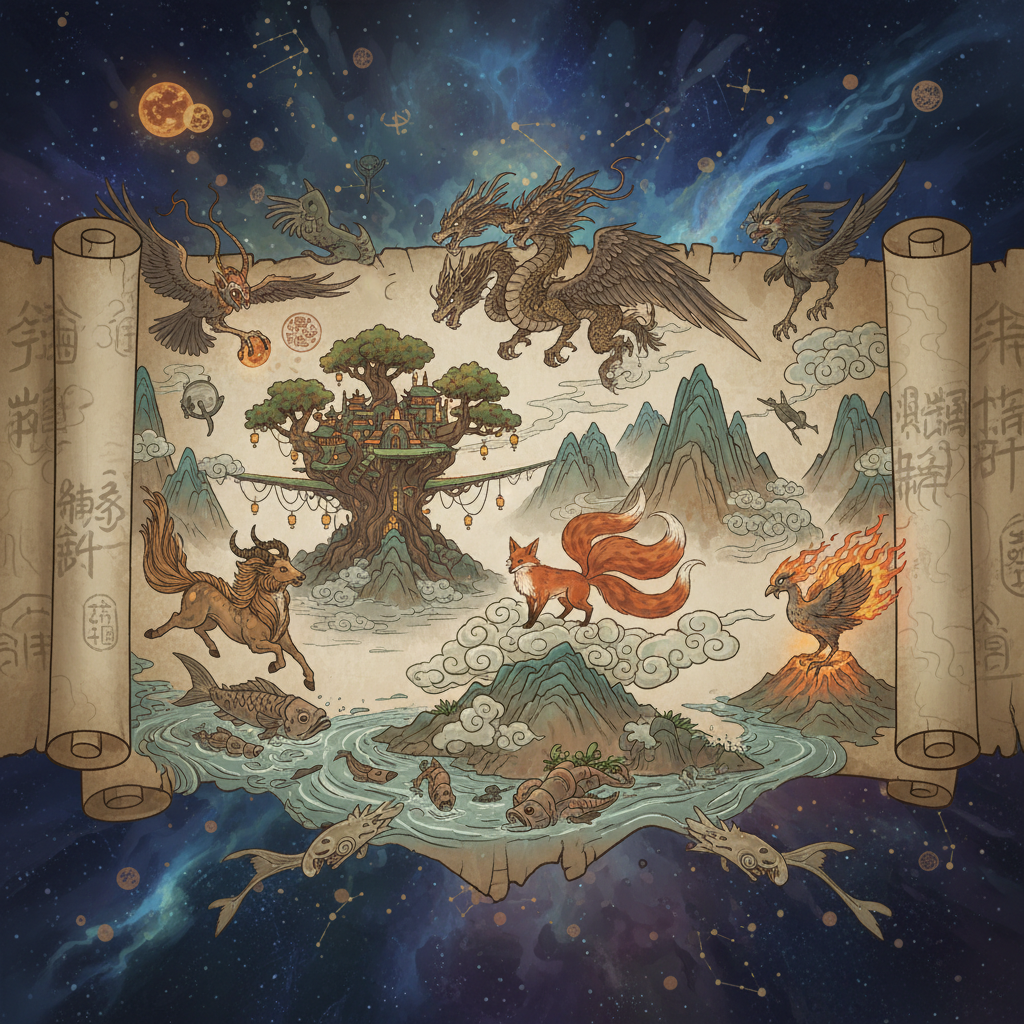
The Shanhaijing: An Overview of China's Ancient Text
The Shanhaijing, or Classic of Mountains and Seas, is one of the most important texts in Chinese mythology. Compiled around the 4th century BCE, this ancient manuscript is a unique confluence of geography, mythology, folklore, and philosophy. It serves not only as a geographical guide to ancient China’s vast and varied landscapes but also as a repository for the myths, legends, and the myriad creatures that inhabit them. Scholars believe that the Shanhaijing has played a crucial role in shaping the Chinese worldview, making it an essential text for understanding cultural narratives.
The Geography and Structure of the Shanhaijing
Composed of 18 sections, the Shanhaijing outlines various mountains, rivers, and seas, populated by a multitude of mythical beings. It is divided into sections based on geographical divisions, from the Eastern Sea to the Western Mountains. Each section introduces the distinct fauna, flora, and creatures associated with that specific region. The text is characterized by its poetic language and vivid imagery, allowing readers to imagine fantastical realms existing just beyond the known world.
Each mountain mentioned in the Shanhaijing is often associated with specific deities or legendary creatures. For example, the Kunlun Mountain is said to be the central axis of the universe and is associated with various immortals, while the legendary Mingyue (Bright Moon) is often inhabited by numerous spirits. This method of structuring not only provides a sense of place but also integrates the environment with myth, creating a rich tapestry of ancient Chinese spirituality.
Mythical Creatures: Guardians of the Natural World
The Shanhaijing boasts an extensive array of mythical creatures, many of which embody natural elements or human qualities. Notable creatures include the Qilin, often described as a hooved chimeric animal believed to herald the arrival of wise rulers, and the Bai Ze, a lion-like beast known for its protective skills. The Shanhaijing also introduces us to the Zhuyin, a long-tailed bird with red feathers that symbolizes auspiciousness and prosperity.
These creatures often serve dual roles—both as guardians of nature and as moral exemplars within stories that teach virtues such as honor, loyalty, and wisdom. The continuous appearance of these beings highlights the interconnectedness of humanity and the natural world in Chinese thought. In a way, they serve as protectors not just of physical lands but also of cultural values, enriching their narratives.
Cultural Significance: The Shanhaijing's Influence Over Time
The cultural impact of the Shanhaijing transcends literature, influencing art, politics, and even traditional Chinese medicine. Throughout history, many depictions of Chinese mythology, whether in painting, sculpture, or literature, draw heavily from the Shanhaijing. Even significant philosophical texts, such as those of Daoism and Confucianism, reference its creatures and realms, illustrating the text's omnipresence in Chinese culture.
Additionally, during the Ming and Qing dynasties, artists and poets often referenced the Shanhaijing in their work, resulting in an upsurge of interest in the mythical beings and landscapes it described. This resurgence allowed for the reinterpretation of traditional stories and legends, allowing each generation to explore their significance in contemporary society.
Modern Interpretations: The Shanhaijing in Contemporary Culture
In recent years, the Shanhaijing has found a new audience through various mediums including film, literature, and visual arts. Modern adaptations of its stories take creative liberties while staying rooted in the original myths. For example, graphic novels and animated series have emerged that reinterpret the Shanhaijing, giving young audiences a fresh take on the venerable tales while inviting them to ponder ecological and philosophical themes.
Moreover, artists are increasingly turning to the Shanhaijing as a source of inspiration, creating artworks that speak to the harmony between humanity and nature. In a world grappling with environmental crises, these modern reinterpretations emphasize the relevance of ancient wisdom in addressing contemporary challenges.
Conclusion: The Lasting Legacy of the Shanhaijing
The Shanhaijing remains a vital source for understanding not only the mythical creatures and lands of ancient China but also the cultural values that have shaped Chinese civilization throughout the centuries. Its profound narratives offer insights into humanity’s relationship with nature, the moral lessons embodied by its creatures, and the continuing evolution of its impact on modern culture. As we delve into its pages, we uncover not only a wealth of mythical beings but also the timeless stories that persistently resonate in contemporary society. By celebrating the Shanhaijing, we ensure that these ancient voices continue to guide us in exploring our own cultural landscapes.