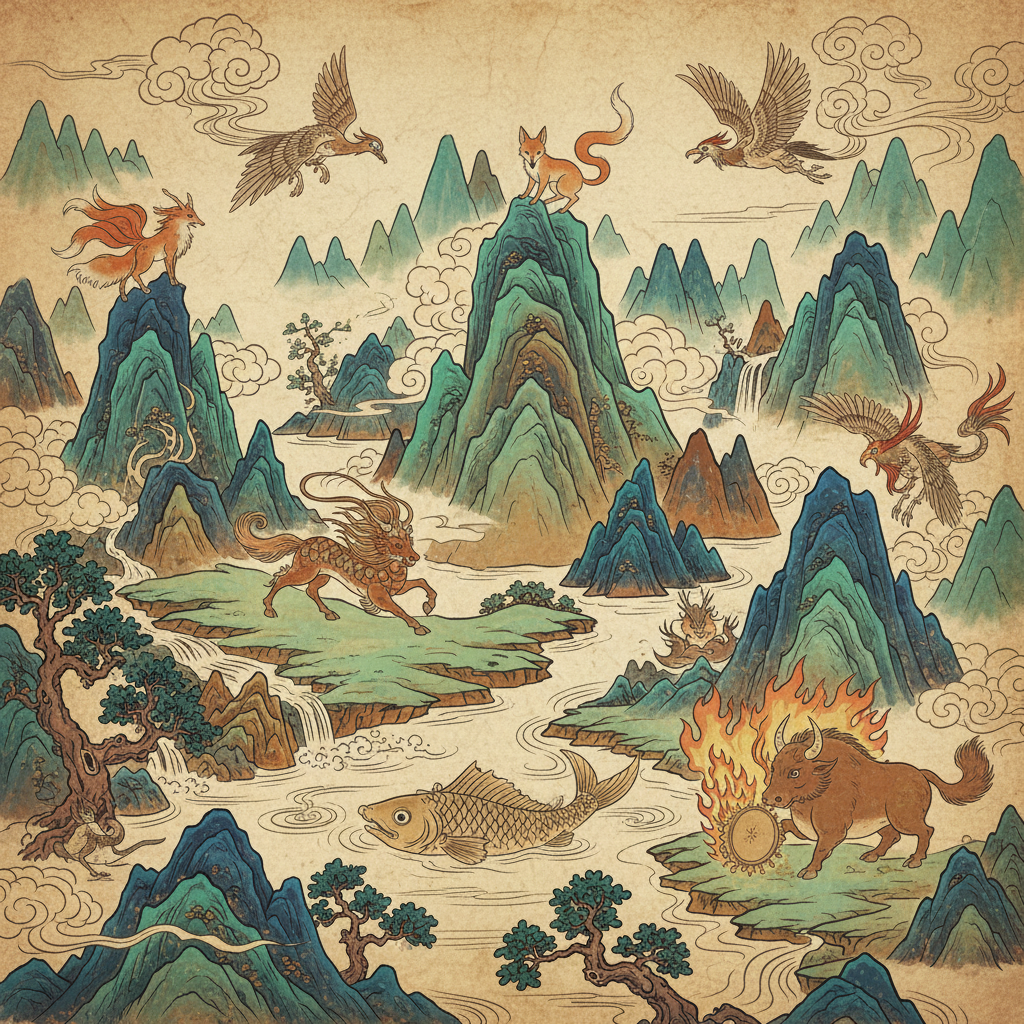
Introduction to the Shanhaijing
The Shanhaijing, or Classic of Mountains and Seas, stands as one of the most significant texts in ancient Chinese literature, packed with rich tales of mythical creatures and fantastical landscapes. Dating back to the 4th century BCE, this classic serves not just as a geographical account of ancient China, but as a window into its deeply embedded mythology, cultural practices, and worldview. In this article, we will delve into the awe-inspiring mountains and splendid creatures that populate this ancient narrative.
Historical Context and Cultural Significance
The Shanhaijing was compiled during various dynasties, with foundational content likely circulating much earlier. It is a compelling amalgamation of folklore, religious beliefs, and geographic knowledge, reflecting the oral traditions of ancient nomadic tribes. The text offers insights into how ancient Chinese societies understood their environment, encapsulating ideas about nature, the supernatural, and the relationship between the two. Exploring characters and stories from the Shanhaijing allows modern readers to engage with broader themes such as humanity's connection to the land, reverence for natural forces, and the mystery of existence.
Mountains: The Sacred Landscape
Mountains in the Shanhaijing are not mere landforms; they are sacred spaces imbued with spiritual significance. Each mountain house a plethora of beings, from benevolent spirits to fearsome monsters. One noteworthy mountain is Kunlun, often considered the axis mundi in Chinese cosmology, linking heaven and earth. It is said to harbor the Queen Mother of the West, a celestial figure wielding immense power. Kunlun transcends mere geography; it symbolizes the ultimate quest for immortality and enlightenment in Chinese thought.
Key Mountains and Their Mythical Inhabitants
-
Mount Tai: Regarded as a site of grandeur, it is a place of reverence where heaven meets earth. The text describes dragons and other benevolent spirits residing here, protecting those who seek wisdom.
-
Mount Hua: Known for its dangerous steep paths, it serves as the residence of various deities and spirits. Its fearsome reputation speaks to the potential perils present in both nature and myth.
-
Mount Song: Often associated with spiritual enlightenment, this mountain is said to be home to god-like figures who embody wisdom, courage, and the pursuit of knowledge.
Fascinating Creatures of the Shanhaijing
In addition to the profound landscapes, the Shanhaijing is filled with extraordinary creatures, each reflecting different cultural beliefs and traditional wisdom. These beings—often hybrids of human, animal, and mythical elements—embody various human experiences and societal values.
-
The Bixie (Hybrid Lion): Described as a creature resembling a lion, the Bixie is often associated with preventing disasters and bringing good fortune. Its dual nature symbolizes strength and protection.
-
The Taotie (Greedy Beast): With a voracious appetite for human flesh, the Taotie serves as a cautionary figure representing greed and excess, born from the fragmented human psyche.
-
The Qiongqi (Fierce Beast): A monster known for its violence, the Qiongqi exemplifies the chaotic elements of nature and serves as a reminder of the darker aspects of existence.
Lessons from the Shanhaijing's Mythical World
As we explore these mountains and their inhabitants, the Shanhaijing unfolds stories that impart valuable lessons about morality, the environment, and humanity. Each tale encapsulates ancient wisdom, revealing how society has historically navigated life's complexities, celebrated virtues, and addressed sinful behaviors.
For instance, the recurring theme of harmony with nature highlights the traditional Chinese belief in the interconnectedness of all living things. The stories encourage readers to respect natural forces and to seek balance in their lives. This reverence resonates even today, as contemporary global cultures grapple with environmental issues and the consequences of disconnection from the natural world.
Conclusion: The Legacy of the Shanhaijing
The Shanhaijing remains a compelling cornerstone of Chinese cultural heritage, offering contemporary audiences a glimpse into the rich tapestry of ancient Chinese thought and mythology. Through its intricate stories of mountains and mythical creatures, the text fosters an appreciation for the beauty of nature and the vivid imagination of humanity. The themes of reverence, balance, and intriguing complexities continue to resonate, encouraging us to consider our own relationships with the landscapes and mysteries that surround us. The exploration of these mythical realms reiterates that the heart of humanity lies in the stories we tell and the connections we forge with the world around us.