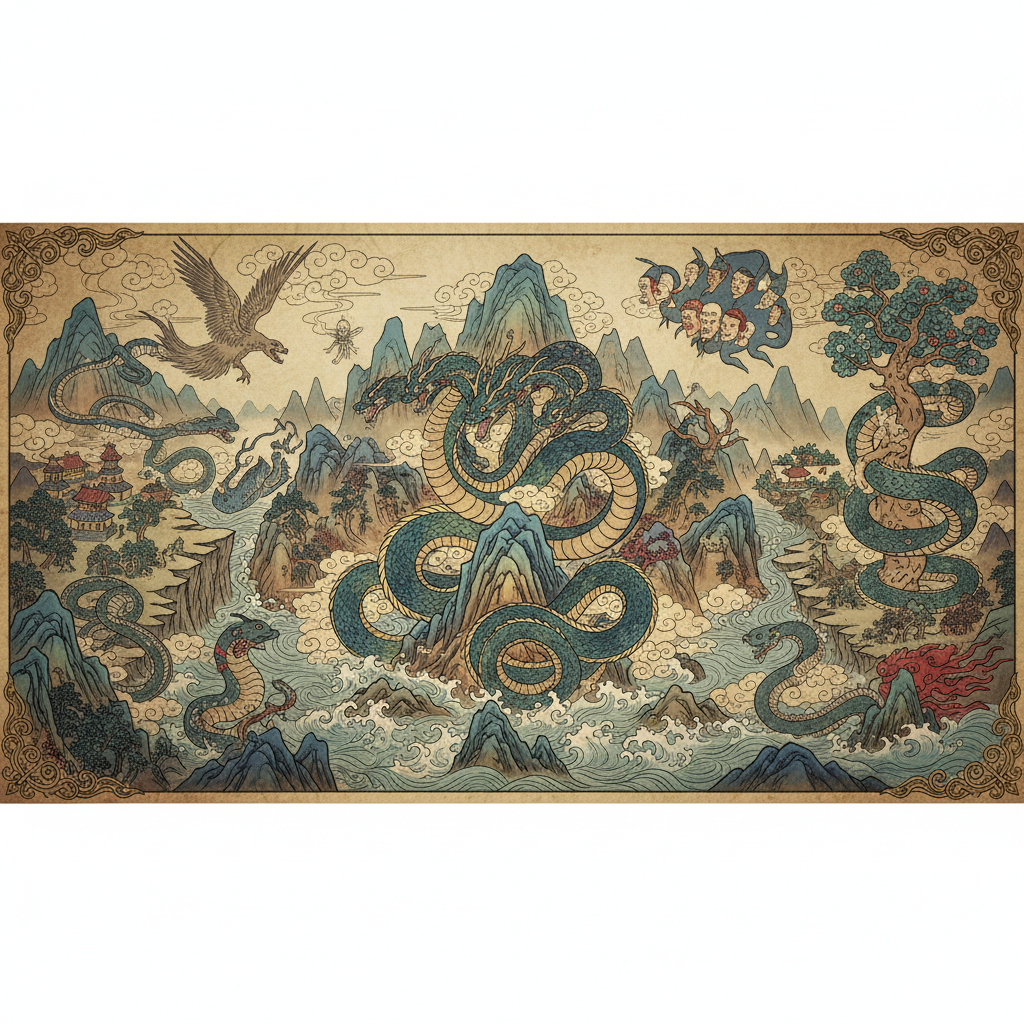
The Enigmatic World of Shanhaijing
The Shanhaijing, or Classic of Mountains and Seas, is a monumental work of ancient Chinese literature that weaves a rich tapestry of mythological geography, legendary beasts, and exotic lands. Compiled from the 4th century BCE to the 1st century CE, this ancient text emerges as an invaluable source of folklore, mythology, and historic perceptions of the natural world. Its diverse episodes are marked by a defining feature: serpents, enigmatic creatures that serve as both symbols of power and cautionary embodiments of nature's untamed elements.
Serpent Myths in Chinese Culture
Serpents in the Shanhaijing not only represent physical beings but also encapsulate the duality of creation and destruction. Culturally, the serpent has played a significant role in Chinese mythology, where it often embodies wisdom, mystery, and, at times, vindictive fury. The juxtaposition of these attributes provides a deeper understanding of how ancient Chinese society viewed nature and its multifaceted dimensions. The serpents in the Shanhaijing amplify these cultural themes, serving as conduits for moral lessons and allegorical tales.
Notable Serpents in the Shanhaijing
One of the most fascinating serpentine creatures recorded in the Shanhaijing is the "Jiao" (蛟). Often depicted as a dragon-like serpent, the Jiao is said to reside in rivers and is associated with floods and storms. This creature holds significant sway over the natural world, reflecting the ancient Chinese reverence for water as both a life-giving force and a potential destroyer. Historical accounts often show how the Jiao is invoked in rituals and prayers for guidance and protection from floods.
Another intriguing serpent is the "Fei Lian" (非常). Known as a winged serpent, the Fei Lian symbolizes the powerful winds and is typically connected to tempestuous weather and change. Its presence in the Shanhaijing reinforces the ancient belief of nature’s unpredictability and the respect it commanded. This serpent is often associated with the virtue of adaptability—a necessity in both the ecological and societal contexts of ancient China.
The Symbolism Behind Serpents
In the Shanhaijing, serpents symbolize much more than mere folklore; they embody the interplay between humanity and nature. As much as they depict the destructive capabilities of the environment, they also represent regeneration and the cyclical patterns of life. The serpents serve as emissaries, often signaling impending change or turmoil, urging human beings towards a greater understanding of their own vulnerabilities and responsibilities.
The ambivalence of serpents, as both destructive forces and embodiments of wisdom, illustrates the ancient understanding that in navigating life's challenges, humility, and respect for the forces beyond human control are paramount. Whether honoring these creatures in festivals or erecting shrines to appease them, ancient Chinese society acknowledged the vital lessons that serpents imparted.
The Cultural Impact of the Shanhaijing
The Shanhaijing and its serpentine inhabitants have significantly impacted Chinese art, literature, and religious practices. From poetry to visual art, these mythical serpents have been portrayed in diverse mediums, inspiring countless generations to explore the nuances of existence and relationships with the environment.
Artistic representations of these creatures have evolved through millennia, often seen in traditional Chinese paintings or modern adaptations that pay homage to their ancient roots. The core themes emanating from these serpents have transcended time, serving as a conduit for exploring human emotions, fears, and aspirations.
Conclusion: The Legacy of Serpents in Shanhaijing
The serpents of the Shanhaijing are fascinating manifestations of ancient Chinese cosmology. They reflect the complex interplay between nature, myth, and morality, granting significant insights into the ancient Chinese perception of the world. As we explore these mythical creatures today, we unearth not just their narratives but also the wisdom they impart about resilience, adaptability, and reverence for nature's forces.
As we advance in an era where humanity continually grapples with ecological challenges, the tales of serpents remind us of the careful balance we must maintain with the world around us. The Shanhaijing remains not only a repository of mythical histories but also a reflective guide for understanding our place within the grand tapestry of existence.