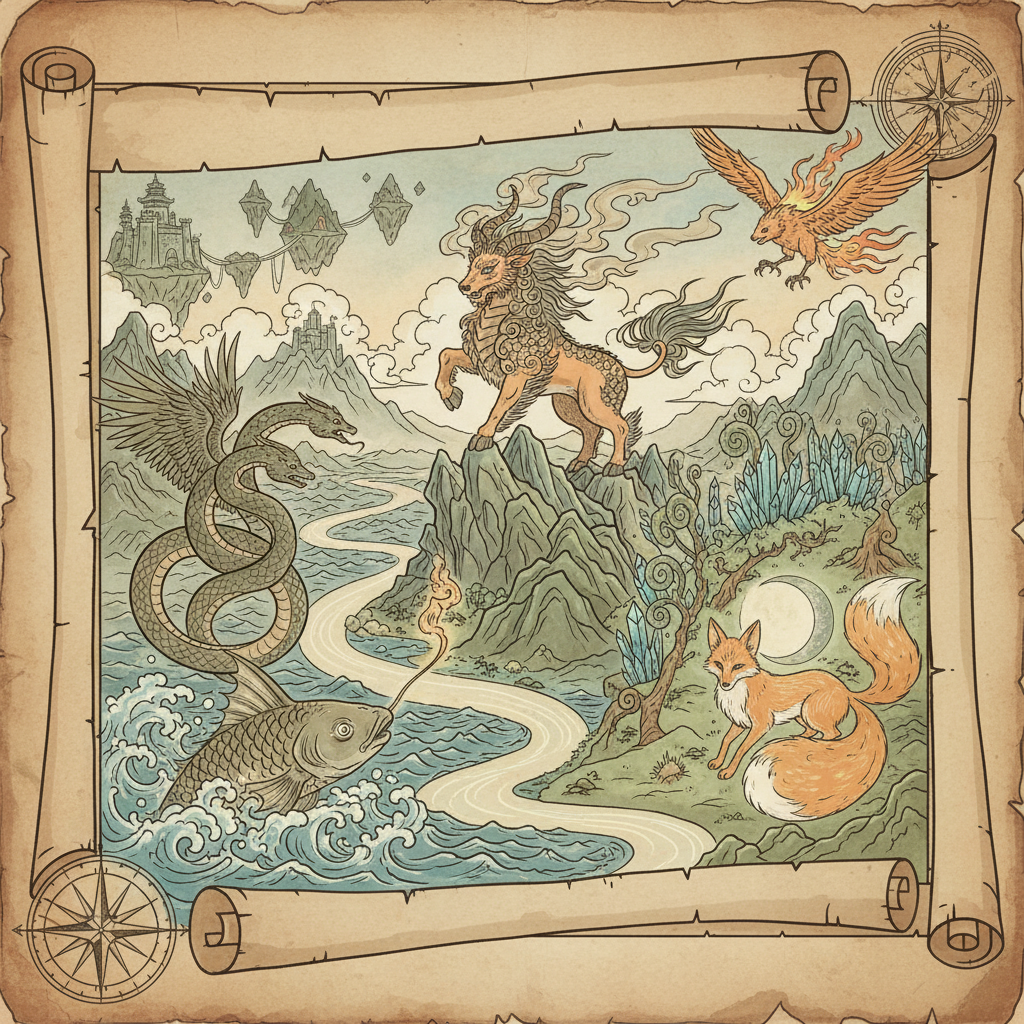
Introduction to the Shanhaijing and Its Mythical Beasts
The Shanhaijing (Classic of Mountains and Seas) is an ancient Chinese text that combines geography, mythology, and folklore into a fascinating tapestry of mythic knowledge. Believed to have been compiled between the Warring States period and the early Han dynasty (circa 4th century BCE to 1st century CE), the Shanhaijing offers detailed accounts of mythical creatures and extraordinary lands, many of which have become integral to Chinese cultural heritage. This article delves into some of the most enigmatic beasts and mystical territories illustrated in this legendary work, shedding light on their historical context and enduring cultural significance.
The Legendary Beasts of the Shanhaijing
One striking feature of the Shanhaijing is its vivid descriptions of fantastic animals, many of which defy conventional biology but symbolize deeper spiritual or natural forces. Among these creatures:
- Jingwei: Often depicted as a small bird attempting to fill the sea with twigs and pebbles, Jingwei is a metaphor for perseverance and resilience. Her myth represents the human struggle against overwhelming natural challenges.
- Qilian: Sometimes rendered as a qilin-like creature or a horned beast, Qilian embodies prosperity and the divine connection between earth and sky. Its elusive nature represents the mysterious forces that shape the natural world.
- Taotie: Often appearing in the form of a monstrous gluttonous face carved on bronze vessels, the Taotie epitomizes insatiable greed and is used as a cautionary symbol against excess. The Shanhaijing recounts a living version with an overwhelming appetite that devours nearly everything it encounters.
These creatures blend allegory, moral lessons, and natural observation into forms that intrigued ancient readers and continue to inspire modern interpretations.
Mythic Lands Beyond the Known World
The Shanhaijing doesn’t just catalog beasts; it maps out strange and otherworldly regions filled with unique phenomena. These lands often serve as liminal zones—thresholds between the mundane and the divine—where natural laws shift and extraordinary events occur.
- Kunlun Mountain: Described as the cosmic axis or the dwelling place of immortals and gods, Kunlun is a sacred mountain surrounded by magical rivers and inhabited by divine beings. It reflects ancient Chinese cosmology and the search for spiritual transcendence.
- The Land of the Bird People: In some chapters, entire peoples are described as having avian qualities or living in harmony with gigantic birds that serve as transport or protectors. This motif explores humankind’s connection to nature and the aspiration for flight or enlightenment.
- The Northern Wilderness: A forbidding expanse believed to be home to terrifying monsters and exotic tribes, this land embodies the ancient Chinese conception of the unknown margins of the world, where order and chaos coexist.
These locations contribute rich symbolic meaning, illustrating the interplay between human civilization and the vast, often hostile forces represented by wilderness and the supernatural.
Historical and Cultural Significance of Shanhaijing Beasts and Lands
The Shanhaijing is more than a mythological compendium; it is a cultural mirror reflecting early Chinese attempts to understand their environment, human nature, and the cosmos. The document influenced literature, art, medicine, and even early cartography by blending empirical observation with mythic imagination.
Scholars suggest that many Shanhaijing creatures may have originated from exaggerated accounts of real animals—such as ancient elephants, giant pandas, or unusual marine life—enhanced by narrative flourishes. This blend of natural history with myth paralleled evolving Chinese worldviews that saw nature as alive with spiritual forces.
Moreover, the moral and cosmological lessons embedded in these myths shaped Confucian, Daoist, and folkloric traditions. For instance, the endurance of Jingwei as a symbol of determination resonates widely, whereas the Taotie’s warning about greed echoes through Chinese moral discourse and festive art.
The Enduring Legacy of Shanhaijing Creatures in Modern Culture
Despite its ancient origins, the Shanhaijing continues to inspire literature, film, gaming, and academic study globally. Its rich illustrations and stories have become a source for modern fantasy and popular culture seeking unique mythical frameworks.
Modern artists and writers revisit these tales, reimagining mythical beasts as characters symbolizing existential and environmental themes. Additionally, the Shanhaijing invites comparative mythology approaches, revealing universal patterns in how human cultures mythologize unexplained phenomena.
Conclusion: Discovering the Wonders of the Shanhaijing
The Shanhaijing remains a captivating window into ancient China’s imagination—a fusion of myth, geography, and philosophy. The mythical beasts and fantastical lands cataloged within its pages encourage readers to explore the boundaries between reality and myth, nature and spirit. From the perseverance embodied by Jingwei to the sacred presence of Kunlun Mountain, these legends continue to enrich cultural understanding and invite reflection on humanity’s enduring relationship with the natural and supernatural worlds.
By uncovering the Shanhaijing’s enigmatic creatures and mystical landscapes, we gain insight not only into an ancient text but into the timeless human quest to make sense of the unknown.