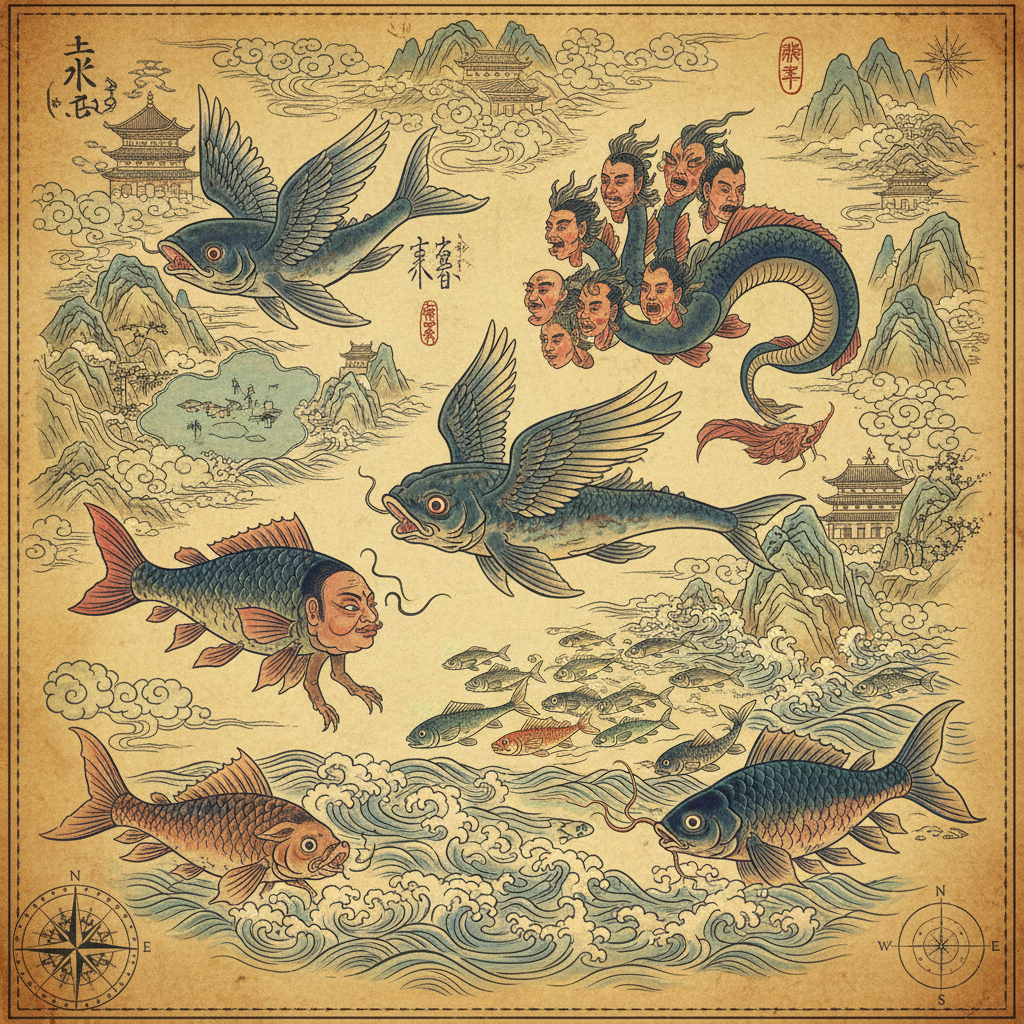
The Fish of Shanhaijing: A Window into Ancient Chinese Mythology
The Shanhaijing, or the Classic of Mountains and Seas, is one of the most significant works in ancient Chinese literature, dated back to the 4th century BC. This monumental text intertwines geography, mythology, and folklore, presenting a vivid tapestry of mythical beasts and fantastical realms. Among these creatures, the fish represent a unique subset of the larger narrative, embodying various cultural significances and mythological implications. This article delves into some of the notable aquatic beings found in the Shanhaijing and explores their historical contexts and cultural relevance.
Mythical Fish Creatures and Their Significance
In the Shanhaijing, fish are not just simple aquatic animals; they are replete with symbolism and often carry connotations of fertility, transformation, and the otherworldly. For instance, the Yao fish, known for its shimmering scales, is often associated with the concept of water spirits. These fish exemplify the belief that various forms of life are interconnected through water, representing the fluidity of existence and continuity.
Another fascinating species mentioned in the text is the Liu fish, said to inhabit the waters of the East Sea. The Liu fish roams in schools and can change its form, signifying transformation and adaptability, traits highly valued in ancient Chinese philosophy. The stories surrounding these fish often reflect themes of renewal and rebirth, mirroring the agricultural cycles that were vital to ancient Chinese society.
Historical Context of Aquatic Myths
Understanding the contextual backdrop of the Shanhaijing is essential for appreciating its mythical creatures. The text was compiled during the Warring States period, a time marked by political upheaval and social change. The emphasis on nature and its creatures can be seen as a reflection of the people's yearning for stability and harmony amidst turmoil. Fish, as symbols of abundance and prosperity, were especially significant in a society deeply dependent on agriculture and commerce. These aquatic beings intriguingly reflect the hopes and dreams of a culture striving to find balance in a tumultuous world.
The Interplay of Nature and Myth
The Shanhaijing seamlessly intertwines natural elements with myth. For example, the depiction of the sacred river, where extraordinary fish dwell, serves as a reminder of the spiritual significance of water in Chinese culture. Rivers were often seen as life-giving forces, essential for sustenance and embodying divine qualities. Mythological fish serve as guardians of these waters, ensuring purity and fertility in the ecosystem. This delicate balance between mythology and nature underscores the philosophical ideals prevalent in ancient Chinese thought, advocating for respect and harmony with the natural world.
The Cultural Impact of Fish Myths in Chinese Society
The legends of the fish found in the Shanhaijing have transcended literature and permeated various aspects of Chinese culture, including art, folklore, and even culinary traditions. For instance, the concept of the carps that leap over the Dragon Gate is a widely known metaphor representing perseverance and ambition. This myth encourages individuals to overcome obstacles to achieve their goals, connecting ancient narratives with modern aspirations.
In addition, the aesthetic representation of fish in Chinese art, from paintings to ceramics, often reflects the ideals found in the Shanhaijing. Fish are celebrated for their abundance and are commonly depicted during festivals, symbolizing good fortune and wealth. This artistic tradition continues to breathe life into the narratives of the Shanhaijing, showcasing how ancient myths still resonate within contemporary culture.
Interesting Details: Fish as Symbols of the Unknown
The mythical fish of the Shanhaijing often possess enigmatic qualities beyond their physical attributes. Some creatures are believed to foretell events or are guided by celestial forces, making them symbols of the unknown. Stories abound of fishermen encountering these divine beings, leading to unexpected fortunes or dire consequences. Such tales serve not only as cautionary lessons but also as reflections of the human desire to understand and navigate the mysteries of life.
Conclusion: A Legacy of Mystique and Meaning
The fish of the Shanhaijing contribute richly to the mythos of Chinese folklore, serving as symbols of transformation, prosperity, and the interconnectedness of all life forms. As we continue to explore this ancient text, we uncover not only the stories of mythological beings but also the profound cultural values that they embody. The mystical creatures of the Shanhaijing, particularly the fish, remind us of the deep currents of history, nature, and human aspiration that flow through our shared narrative, inviting exploration and reverence for both the past and the present.