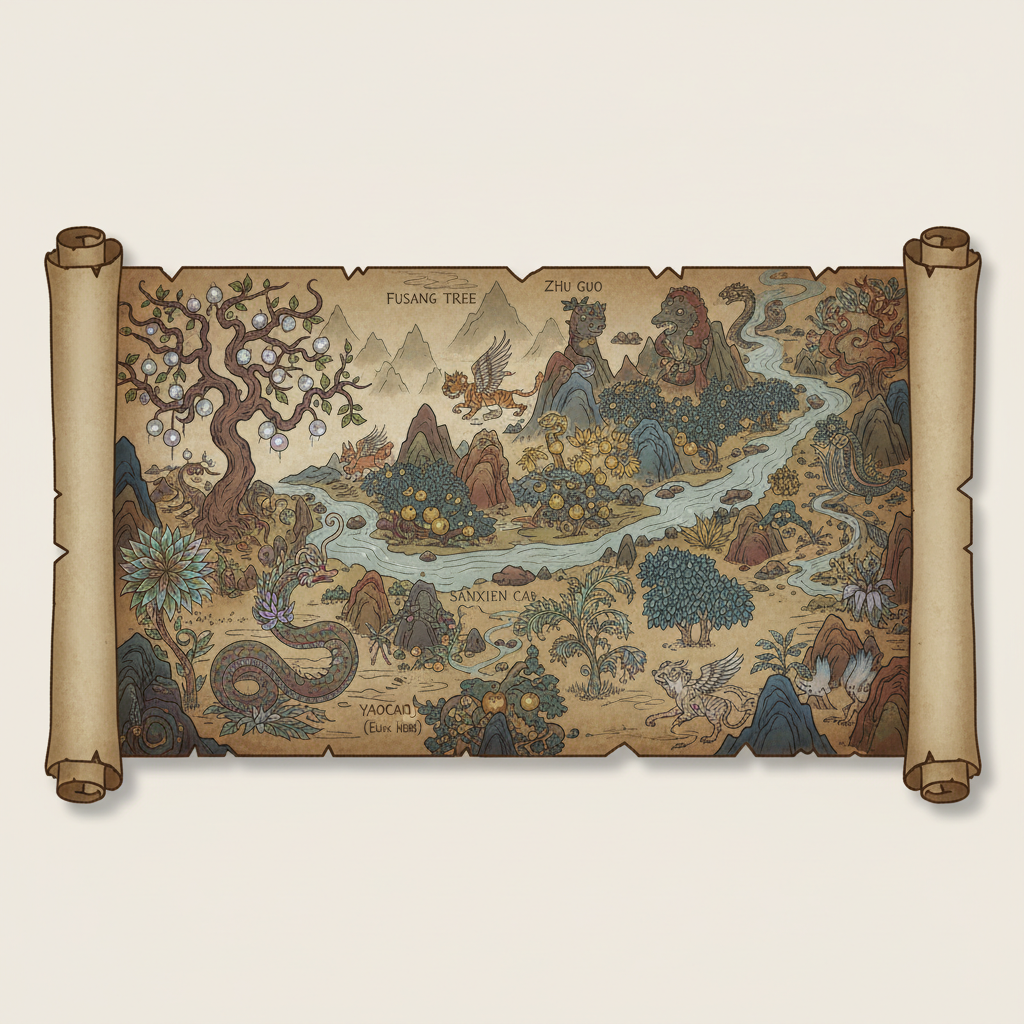
The Enigmatic World of Shanhaijing
The Shanhaijing, or the "Classic of Mountains and Seas," is an ancient Chinese text that has fascinated scholars and enthusiasts alike with its myriad of mythical creatures, landscapes, and cultural insights. Compiled during the Warring States period to the early Han dynasty, it serves as both a geographical survey and a treasure trove of folklore. Within its pages, readers encounter not just legendary beings and places, but also an inspiring array of fantastical plants that symbolize the mysterious relationship between nature and mythology.
Plants as Symbols in Chinese Culture
In Chinese culture, plants have held significant symbolic meanings for centuries. From the resilient bamboo representing strength to the lotus symbolizing purity, flora has often embodied philosophical paradigms and ideals. The plants featured in the Shanhaijing also carry these symbolic weightings, incorporating spiritual dimensions while reflecting the natural world as perceived by ancient Chinese peoples.
The Legendary Flora of Shanhaijing
1. The Sacred Yang Plant
One of the more notable plants described in the Shanhaijing is the Sacred Yang Plant. It is said to bloom on the mythical Kunlun mountain, revered in ancient texts as the center of the universe and home to gods. This plant is believed to have healing properties and can revive the dying. Throughout history, it symbolizes rebirth and renewal, reflecting the Chinese belief in cyclical transformations. The Sacred Yang Plant presents a dual role in the narrative: a source of physical healing and a metaphor for spiritual rejuvenation.
2. The Fabled Scented Pinwheel
Another fascinating plant mentioned in the text is the Fabled Scented Pinwheel, known for its intoxicating aroma. According to legend, this plant can soothe the minds and hearts of those who inhale its fragrance, enabling communication with the spirit world. This enchanting plant not only emphasizes the profound connection between nature and spirituality but also nods towards the ancient Chinese belief in the power of scent for emotional and spiritual healing. In many ways, the Fabled Scented Pinwheel embodies the harmony sought between human emotions and the greater cosmos.
3. The Elusive Vine of Harmony
Among the mystical flora is the Elusive Vine of Harmony, a plant that is said to thrive in the land of the immortal. This vine is revered for its ability to bring peace and unity among conflicting parties. In a society often embroiled in political strife, this plant's symbolism of harmony resonates deeply. It serves as a reminder of the importance of unity and cooperation, ideals echoed throughout Chinese philosophy. The description of the Elusive Vine fosters an understanding of nature as a teacher, imparting wisdom crucial for societal balance.
Cultural Resonance Through Time
The plants described in the Shanhaijing have transcended the boundaries of the text itself. They have permeated various aspects of Chinese culture, appearing in literature, art, and even contemporary discussions. For example, traditional Chinese medicine often draws from these mythical plants, interpreting their characteristics symbolically to formulate holistic health practices. The generational storytelling of these plants reinforces a deep cultural appreciation for nature's wonders, bridging the gap between ancient wisdom and modern sensibilities.
Ecological Awareness Inspired by Myth
In recent years, the revival of interest in the Shanhaijing and its flora has also sparked conversations around environmentalism and ecological sustainability. As today's society grapples with global crises tied to climate change and biodiversity loss, the mythical plants of the Shanhaijing remind us of the significance of preserving not only cultural narratives but also the real flora that populates our world. The interconnectedness highlighted in these myths echoes modern ecological understandings, emphasizing humanity's relationship with nature as both a physical and spiritual journey.
Conclusion: Embracing the Myths and Lessons of Shanhaijing
The Shanhaijing offers much more than a catalog of mythical beings and landscapes; it serves as a vital historical text that intertwines flora, fauna, and human experience through captivating narratives. The magical plants depicted within its pages challenge us to explore the significance of nature in our lives while celebrating the rich tapestry of Chinese culture. As we continue to delve into these ancient tales, let us embrace their lessons and reflect upon our relationship with the diverse, living world around us.