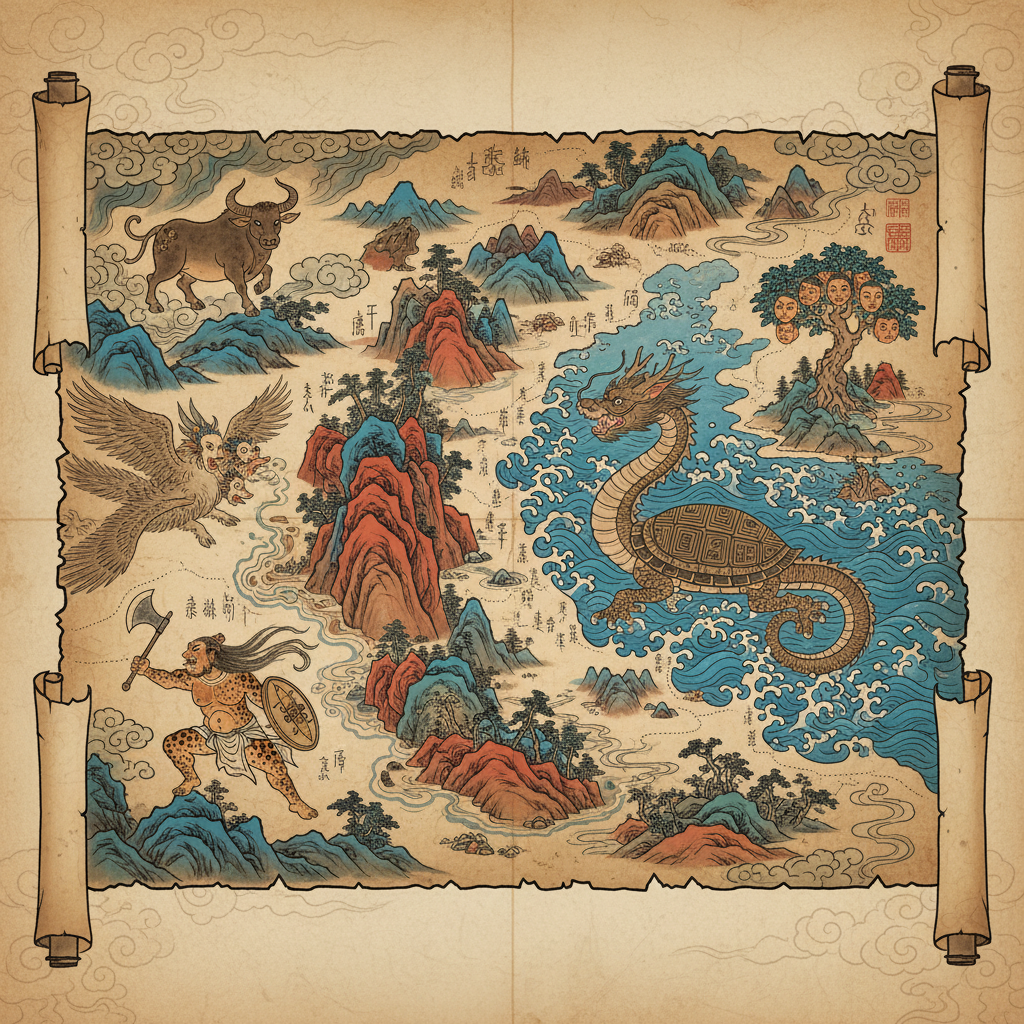
Introduction to Shanhaijing: A Window into Ancient Chinese Cosmology
The Shanhaijing (Classic of Mountains and Seas) stands as one of the most enigmatic and intriguing texts in Chinese literature, weaving together geography, mythology, and cosmology. Dating back to the Warring States period (475–221 BCE) and compiled over centuries, it offers a unique assemblage of mythical creatures and fantastical lands that reflect the worldview and cultural imagination of ancient China. Though primarily a geographical text, the Shanhaijing transcends simple cartography by depicting a cosmology filled with mysterious beings and sacred mountains, serving as a vital lens for understanding Chinese mythic geography and spiritual cosmology.
Historical Context and Cultural Importance of the Shanhaijing
The Shanhaijing is traditionally divided into several sections describing mountains, seas, rivers, and mythical territories. As an early Chinese compilation, it blends empirical observations with myth, illustrating how ancient peoples tried to map and interpret the world around them. Despite its sometimes cryptic and fragmented text, it has influenced Chinese folklore, classical poetry, religious thought, and artistic expression throughout dynasties. The Shanhaijing is not just a mythological compendium; it also encapsulates prerational knowledge and reflects ancient Chinese cosmology where the terrestrial world connects with spiritual realms through mythical geography.
Mythical Creatures: Guardians, Monsters, and Divine Beings
One of the most captivating aspects of the Shanhaijing is its vivid descriptions of extraordinary creatures inhabiting the mythical lands. These beings often possess supernatural abilities and symbolize natural and cosmic forces. For example, the Jingwei is a bird that continually attempts to fill the sea with twigs, representing perseverance. The Taotie, a monstrous face motif frequently found on ritual bronze vessels, is depicted in the text as a gluttonous creature consuming everything — a symbol of insatiable desire.
Other creatures include various hybrids — such as the Kui, a one-legged dragon-like creature associated with music and thunder. Some creatures embody cosmic principles or natural dangers, serving symbolic roles in Chinese mythic geography. Many also function as intermediaries between the human and divine realms, underscoring an interconnected cosmos where nature, spirituality, and morality converge.
Enigmatic Lands and Sacred Mountains: Mapping the Mythical World
In addition to its mythical fauna, the Shanhaijing details strange and wondrous lands, often centered around sacred mountains that are homes to gods and immortal beings. These mountains were believed to be points of connection between Earth and Heaven, integral to the ancient Chinese understanding of the universe’s structure. The text describes places such as the Kunlun Mountain, a mythic axis mundi where immortals reside, and the Jade Mountain, opulent and mysterious, symbolizing divine authority and cosmic order.
Some lands are described as perilous realms inhabited by hostile tribes or supernatural obstacles, reflecting the ancient Chinese perception of the world’s edges as wild, chaotic zones beyond civilization. These regions often contain bizarre topographies and exotic flora, suggesting the metaphorical journey of spiritual or moral transformation through encounters with the unknown.
Cultural Legacy and Influence on Chinese Cosmology
The creatures and lands of the Shanhaijing have been deeply woven into Chinese culture and cosmology. Not only do they appear in literary and artistic traditions, but their symbolic meanings continue to inform interpretations of nature, myth, and the heavens. The text’s worldview—one where geography is animated by spirits and cosmic beings—mirrors Daoist philosophies emphasizing the harmony between heaven, earth, and humanity.
Moreover, the Shanhaijing’s creatures and sacred geography shaped rituals, folklore, and the Chinese concept of the cosmos’s moral fabric. Its influence extends into contemporary popular culture and scholarship exploring ancient Chinese spirituality and mythic imagination, highlighting the enduring human desire to understand the world through stories that blend nature and the supernatural.
Conclusion: Understanding Ancient Cosmos through Shanhaijing’s Imagery
The Shanhaijing remains an indispensable resource for comprehending the mythic psyche of ancient China. Its mythical creatures and enigmatic lands provide rich symbolism about natural forces, moral principles, and spiritual realms, illustrating how early Chinese societies conceptualized their place within a vast, interconnected cosmos. By studying these mythological elements within their cosmological context, modern readers gain insight into ancient Chinese thought, culture, and the timeless human endeavor to explore and narrate the mysteries of existence.